
Commercial door hardware
Lock Specialists installs and services mechanical door hardware, including panic bars, exit devices, and door closers.
ON THIS PAGE
What is commercial door hardware?When is commercial door hardware needed?What does commercial door hardware include?How does commercial door hardware work?Types of commercial door hardwareWhat systems and components does commercial door hardware cover?What are the benefits of commercial door hardware?Repair vs. replacement: which is appropriate?What affects the cost of commercial door hardware?How long does commercial door hardware take?What should you expect during commercial door hardware work?Why choose Lock Specialists for commercial door hardware?Frequently asked questions about commercial door hardwareSchedule commercial door hardwareOVERVIEW
What is commercial door hardware?
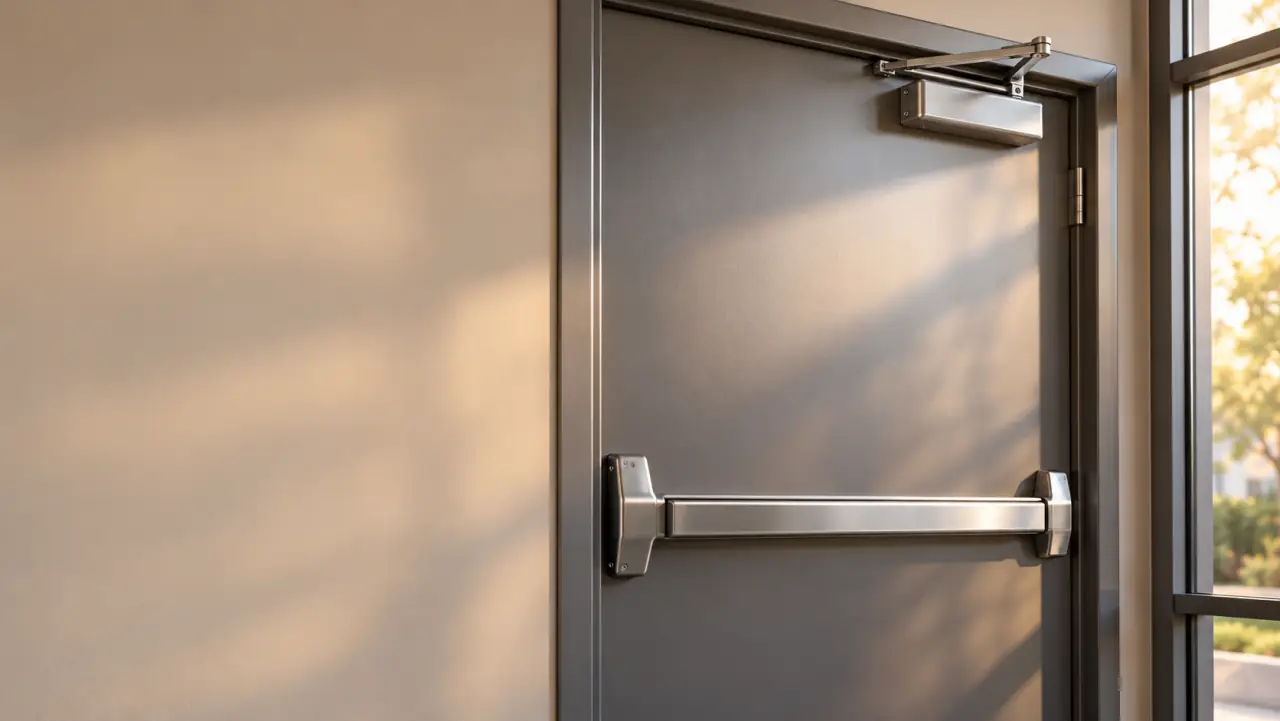
Commercial door hardware is the mechanical equipment that latches, closes, and releases a commercial door.
This includes panic bars, exit devices, door closers, latches, and strike plates. Each part affects how the door opens, closes, and holds.
Lock Specialists services the mechanical parts only. It does not certify fire-code compliance or inspect fire exits, so check local requirements with your building official.
WHEN IT APPLIES
When is commercial door hardware needed?
You need it when a door sticks, slams, or stops latching reliably.
Signs you need commercial door hardware service
- The bar or handle sticks, rattles, or fails to release.
- The door closes too hard or drifts open.
- The latch does not engage the strike plate.
- Hardware shows cracks, loose fasteners, or visible wear.
Common problems commercial door hardware addresses
- Worn springs and dogging mechanisms.
- Misaligned strikes after a door or frame settles.
- Dirt or debris in latch mechanisms.
- Hardware installed with the wrong handing or backset.
SCOPE
What does commercial door hardware include?
Each visit covers inspection, adjustment or replacement, and a full function check.
Inspection and assessment
The technician checks the device, closer, latch, and strike for wear and alignment.
Preparation and protection
The technician confirms the door’s handing and checks how the parts fit the frame. Door finishes get protected during adjustment.
Service work and procedures
The technician adjusts, cleans, lubricates, or replaces the failed components.
Testing and verification
The technician tests the bar, closer speed, and latch engagement before leaving.
PROCESS
How does commercial door hardware work?
Service follows four steps from your call to a tested door.
Initial evaluation
You describe the door, the hardware, and the problem you see. You receive an upfront quote.
Recommended scope of work
The technician explains whether the fix is an adjustment, a part replacement, or a full device change.
Service execution
The technician completes the agreed work with parts from the van. Some devices need parts the van does not carry, which can add a return visit.
Final inspection and completion
The technician cycles the door open and closed several times and reviews the result with you.
TYPES
Types of commercial door hardware
Each type of device follows a different service path.
Panic bar installation
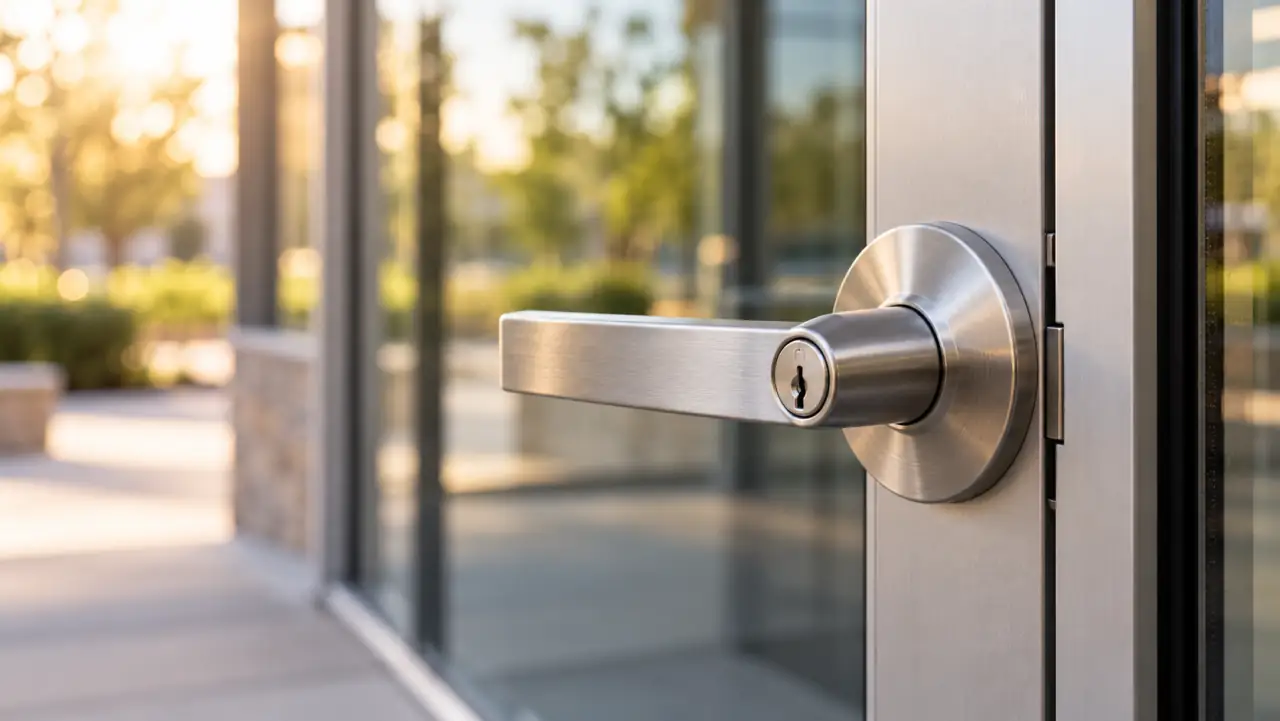
A panic bar lets occupants push the door open from inside with one motion. Lock Specialists installs the mechanical bar, latch, and strike, then checks that the latch releases and returns fully. The installation does not certify fire-code compliance.
Fire exit hardware servicing
Fire exit hardware is the mechanical device on a door that serves as an exit route. Service covers the latch, spring, and bar mechanism. Compliance questions belong to the fire marshal or building official.
Door closer installation and adjustment
A door closer controls the closing speed and how firmly the door latches. The technician sets the closing and latching speed and mounts the closer to the door and frame. An undersized closer may not hold a heavy door.
Exit device repair
Exit devices with a rim latch or vertical rods need repair when the bar feels loose or the latch sticks. Technicians often replace the latch or rod assembly rather than the full device.
COVERAGE
What systems and components does commercial door hardware cover?
The service covers the mechanical components that move and hold a commercial door.
Panic bars and exit devices: rim, mortise, and vertical rod types.
Door closers: surface-mounted and concealed closers.
Latches and strikes: latch bolts, dead latches, and strike plates.
Hinges: hinge alignment and fasteners that affect latch performance.
BENEFITS
What are the benefits of commercial door hardware?
Properly set hardware keeps doors easier to use and easier to control.
Reliable latching
The door closes and latches as the hardware is designed to.
Controlled closing
A tuned closer stops slamming without forcing the door shut.
Smoother daily use
Bars and handles operate without sticking.
Fewer surprises
The technician catches worn parts before they fail.
REPAIR OR REPLACE
Repair vs. replacement: which is appropriate?
Adjust or repair when the device works in principle, and replace it when wear runs deep.
Repair makes sense when
- The problem is alignment, lubrication, or a single worn part.
- Parts for the device are still available.
- The frame and door are in good shape.
Replacement makes sense when
- The housing is cracked or the mechanism is worn throughout.
- Parts for the device are no longer available.
- Repeated repairs approach the cost of a new device.
COST
What affects the cost of commercial door hardware?
Cost depends on the device type, its condition, and how the door fits its frame.
A closer adjustment costs less than a full exit device replacement. Heavy doors and parts that must be ordered add to the total. Lock Specialists gives an upfront quote before any work begins.
TIMING
How long does commercial door hardware take?
Adjustments take less time than device replacements.
A closer adjustment or latch alignment often finishes in one visit. A panic bar or exit device replacement takes longer, and parts ordered in advance can add a return visit.
WHAT TO EXPECT
What should you expect during commercial door hardware work?
Expect a clear diagnosis before any parts change.
A written upfront quote before work begins.
A check of the door, frame, and strike before any adjustment.
A function test of the bar, handle, and closer.
Tell the technician which doors see the most traffic, because heavy traffic changes the wear pattern and the right hardware.
WHY US
Why choose Lock Specialists for commercial door hardware?
Lock Specialists is a family-owned Simi Valley company serving the area since 1973.
Licensed: California locksmith license LCO6643, regulated by the Bureau of Security and Investigative Services (BSIS).
Background-checked: technicians complete Live Scan background checks.
Mechanical focus: the work covers latches, bars, closers, and strikes only.
Clear limits: the company does not certify fire-code compliance, so confirm requirements with your building official.
Service areas: Simi Valley, Moorpark, Thousand Oaks, Chatsworth, and Porter Ranch.
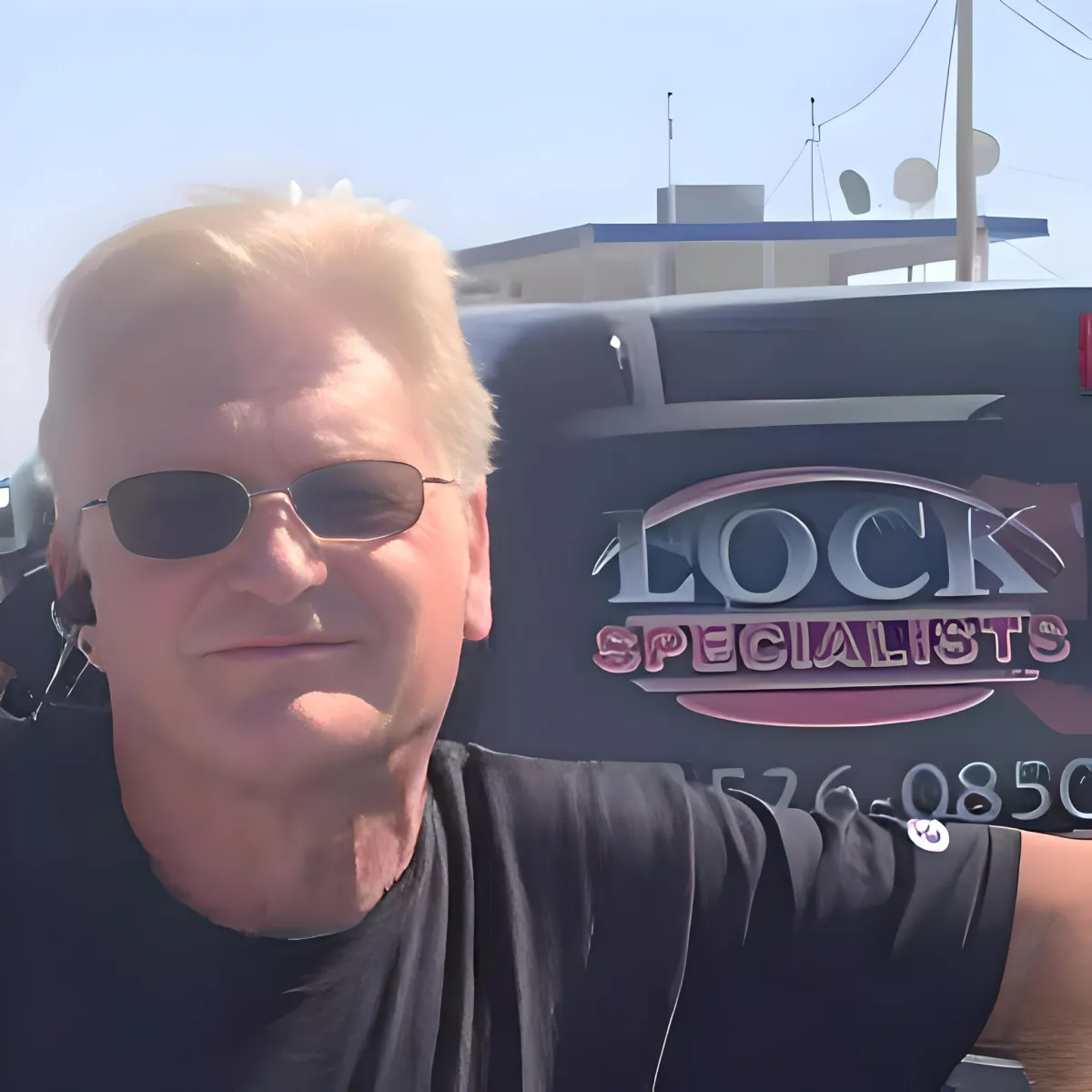
Dennis Murphy, owner of Lock Specialists, with the company service van.
FAQs
Frequently asked questions about commercial door hardware
Can commercial door hardware fix a panic bar that sticks?
Yes. A technician checks the latch mechanism, the bar’s return spring, and the strike alignment. Many sticking bars need cleaning, adjustment, or a new latch rather than a full device swap.
How often is commercial door hardware service needed?
Heavy-use doors need checks more often than storage or office doors. Lubricating hinges, closers, and latch mechanisms as the manufacturer directs keeps them working.
What happens if a worn door closer is left unaddressed?
The door can slam, fail to latch, or stay open. Excess force on the door and frame can also damage the hardware.
Can commercial door hardware service be completed without closing the entrance?
Often, when the work covers one door at a time. Technicians may need a door out of service briefly, so plan the sequence with your property manager.
What maintenance is needed after commercial door hardware work?
Check that latches fully retract and that closers pull the door shut from the open position. Tighten loose screws and clear dust from latches and strikes.
CUSTOMER REVIEWS




Schedule commercial door hardware
