
Historic key fabrication
Lost the key to an antique lock? Lock Specialists fabricates keys for warded and lever locks on site, working from the mechanism itself.
ON THIS PAGE
What is historic key fabrication?When is historic key fabrication needed?What does historic key fabrication include?How does historic key fabrication work?Types of historic key fabricationWhat systems and components does historic key fabrication cover?What are the benefits of historic key fabrication?Repair vs. replacement: which is appropriate?What affects the cost of historic key fabrication?How long does historic key fabrication take?What should you expect during historic key fabrication?Why choose Lock Specialists for historic key fabrication?Frequently asked questions about historic key fabricationSchedule historic key fabricationOVERVIEW
What is historic key fabrication?
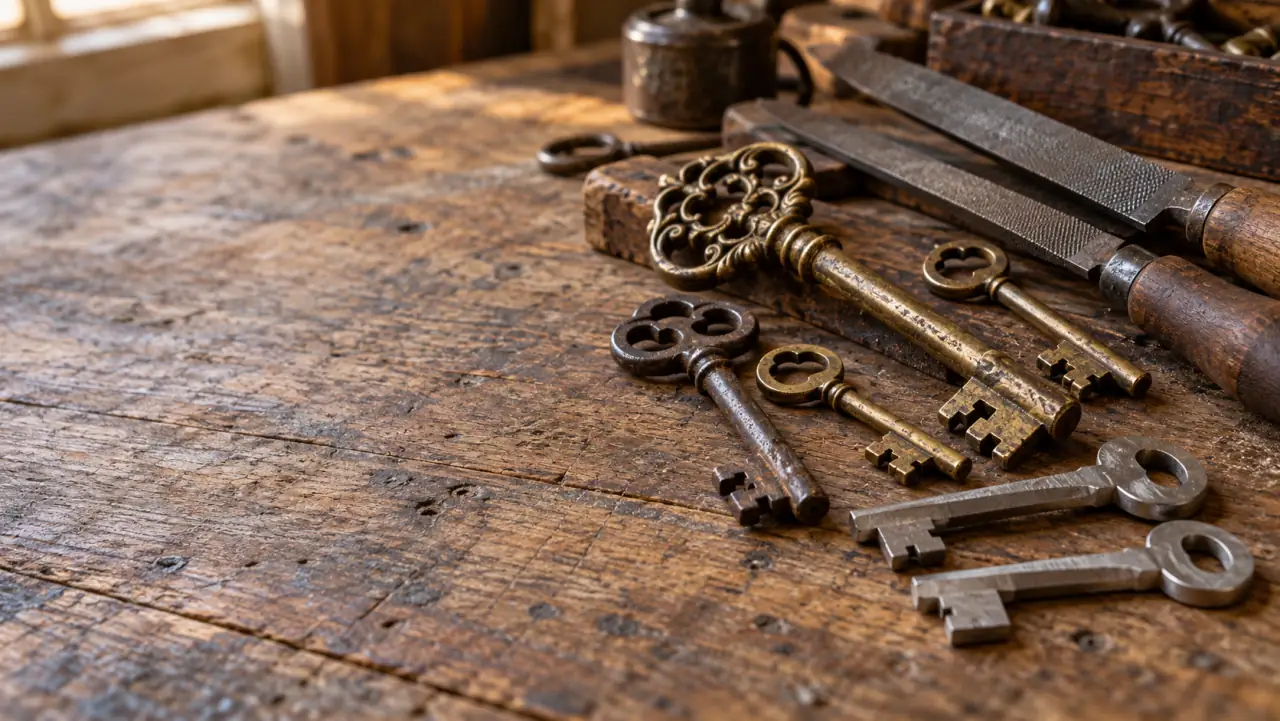
Historic key fabrication is the making of keys for antique locks, often when no original key survives.
A technician studies the lock’s internal wards, levers, or pins and builds a key that operates the mechanism. Methods include cutting by hand from a blank and impressioning, which uses trial fits and marks inside the lock.
Lock Specialists has served Simi Valley since 1973. Each job starts with a review of the lock before any cutting begins.
WHEN IT APPLIES
When is historic key fabrication needed?
You need it when an antique lock has no working key.
Signs you need historic key fabrication
- The original key is lost, broken, or missing.
- The lock turns with a tool but no key exists.
- Keys on hand do not fit the historic lock.
- You are restoring a house and want the locks to operate again.
Common problems historic key fabrication addresses
- Worn key bits that no longer lift the levers.
- A key lost decades ago with no copy on record.
- Warded locks where a key blank is no longer available.
- Original keys bent or damaged by corrosion.
SCOPE
What does historic key fabrication include?
Each job covers review, fabrication, and fit testing.
Inspection and assessment
The technician examines the lock’s wards or levers and notes wear, bends, and missing parts.
Preparation and protection
The technician selects a blank of suitable material and protects the lock’s finish from scratches.
Service work and procedures
The technician cuts or files the key by hand, or impresses it through trial and marking inside the lock.
Testing and verification
The technician tests the key in the lock to confirm the bolt or latch moves fully.
PROCESS
How does historic key fabrication work?
The work moves from review to a tested key.
Initial evaluation
You describe the lock, its age and maker if known, and any surviving keys. You receive an upfront quote.
Recommended scope of work
On site, the technician explains whether the mechanism holds enough detail to build a working key.
Service execution
The technician fabricates the key and trial fits it, adjusting as needed.
Final inspection and completion
The technician tests the key through the full range of motion and hands you the finished key.
TYPES
Types of historic key fabrication
The method depends on the lock's design.
Skeleton key fabrication
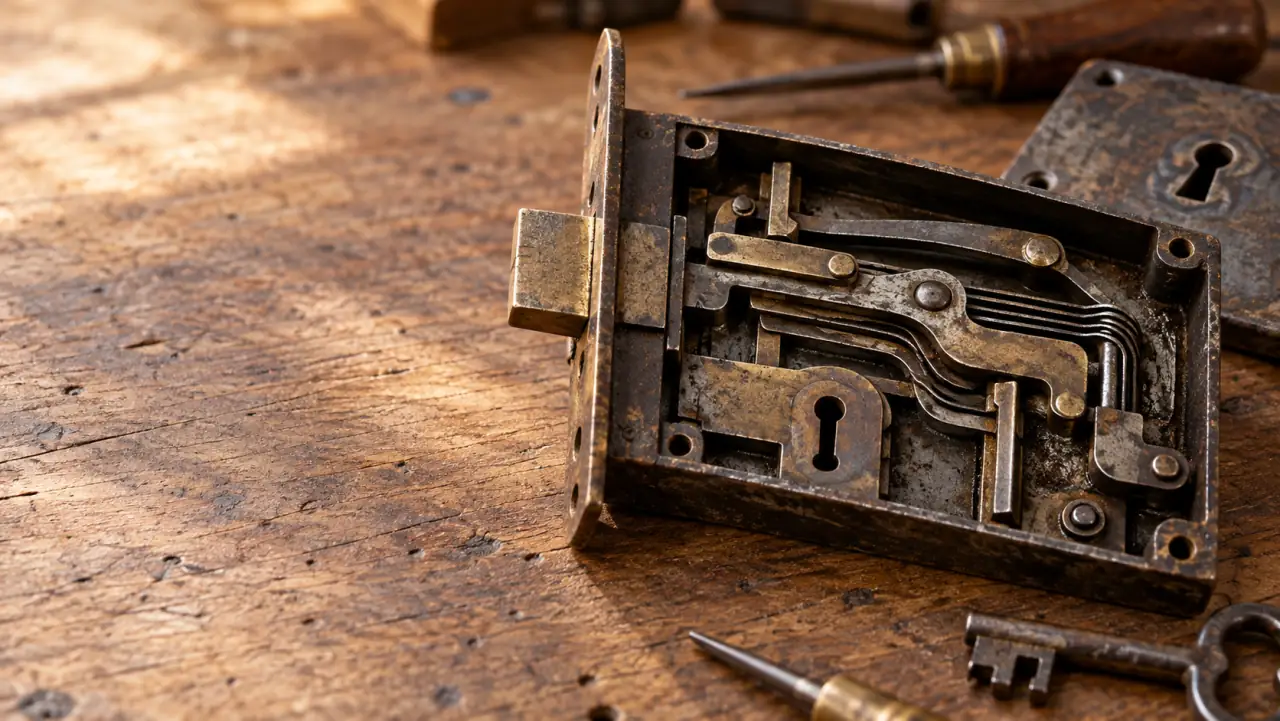
A skeleton key has a simplified cut that lifts the lock’s levers. It works on some older lever locks but not on all designs, so the technician confirms compatibility first.
Warded key cutting
A warded key has notches and cutouts that clear the fixed wards inside the lock. Technicians match the cuts to the ward pattern, which is often the only record of the lock.
Hand key impressioning
The technician inserts a blank, turns it, and files small amounts where the pins or levers leave marks on the metal. Repeated trials build the key. This method takes time and skill.
COVERAGE
What systems and components does historic key fabrication cover?
The service covers the historic locks most owners encounter.
Warded locks: cabinet, chest, and interior door locks with fixed wards.
Lever locks: older lever mechanisms in interior and exterior doors.
Cylinder locks: early pin and lever cylinders where a key blank can be matched.
Some rare or heavily modified locks lack enough surviving detail to key. The technician explains that limit before you approve work.
BENEFITS
What are the benefits of historic key fabrication?
A new key restores use without replacing the lock.
Original lock kept
The mechanism stays in place and remains in service.
Original material preserved
The technician works from the lock without replacing it.
Usable result
The key is tested in the lock before you leave.
Pattern record
The technician can note the key pattern for future reference.
REPAIR OR REPLACE
Repair vs. replacement: which is appropriate?
Fabricating a key often beats replacing the lock.
Fabrication fits when
- The lock is original and in working condition.
- The mechanism is intact and the key pattern can be read.
- Replacing the lock would remove historic hardware.
Replacement fits when
- The internal mechanism is broken beyond practical repair.
- The lock was altered so heavily that no key pattern can be determined.
- Security needs call for a new lock, and you accept the loss of the original.
COST
What affects the cost of historic key fabrication?
Cost depends on the lock's complexity and the method needed.
Hand impressioning takes more time than cutting from a known pattern. Lock Specialists gives an upfront quote before beginning any work.
TIMING
How long does historic key fabrication take?
Many keys take one visit, while complex locks take longer.
Cutting from a known pattern can finish in a single visit. Impressioning can require several trial rounds, and the technician explains the expected time after the review.
WHAT TO EXPECT
What should you expect during historic key fabrication?
Expect a careful, test-driven process that keeps the lock intact.
A review of the lock before any cutting begins.
A trial fit after each key adjustment.
A plain explanation of the method and any limits.
A final test of the key through the full bolt or latch travel.
Do not force an old lock with a bent or improvised key. Forcing can bend levers or snap a worn bit inside the cylinder.
WHY US
Why choose Lock Specialists for historic key fabrication?
Lock Specialists is a family-owned Simi Valley company serving the area since 1973.
Licensed: California locksmith license LCO6643, regulated by the Bureau of Security and Investigative Services (BSIS).
Background-checked: technicians complete Live Scan background checks.
On-site work: the mobile van carries tools for fabrication and fitting.
Upfront quotes: you see the price before work begins.
Service areas: Simi Valley, Moorpark, Thousand Oaks, Chatsworth, and Porter Ranch.

Dennis Murphy, owner of Lock Specialists, with the company service van.
FAQs
Frequently asked questions about historic key fabrication
Can historic key fabrication make a key for a lock with no surviving key?
In many cases, yes. The technician works from the lock’s wards or levers. Results depend on how complete and readable the mechanism remains.
How often is historic key fabrication needed?
Only when a key is lost, broken, or missing. Owners who keep a spare key on record rarely need the service again.
What happens if a missing key is left unaddressed?
The lock may be forced open later. Forcing an antique mechanism often damages the wards, levers, and surrounding wood.
Can historic key fabrication be completed without damage to the lock?
Often, yes. Technicians work from the lock itself and avoid removing original parts. Some keys need partial disassembly, so the work carries a small risk.
What maintenance is needed after historic key fabrication?
Keep the new key with the original and avoid using it on a stuck lock. Lubricate the mechanism lightly as part of routine care, and recheck the fit if the lock sees heavy use.
CUSTOMER REVIEWS




Schedule historic key fabrication
