
Antique lock repair
Stuck, worn, or broken antique lock? Lock Specialists repairs the internal mechanism on site and keeps original parts wherever the lock allows.
ON THIS PAGE
What is antique lock repair?When is antique lock repair needed?What does antique lock repair include?How does antique lock repair work?Types of antique lock repairWhat systems and components does antique lock repair cover?What are the benefits of antique lock repair?Repair vs. replacement: which is appropriate?What affects the cost of antique lock repair?How long does antique lock repair take?What should you expect during antique lock repair?Why choose Lock Specialists for antique lock repair?Frequently asked questions about antique lock repairSchedule antique lock repairOVERVIEW
What is antique lock repair?
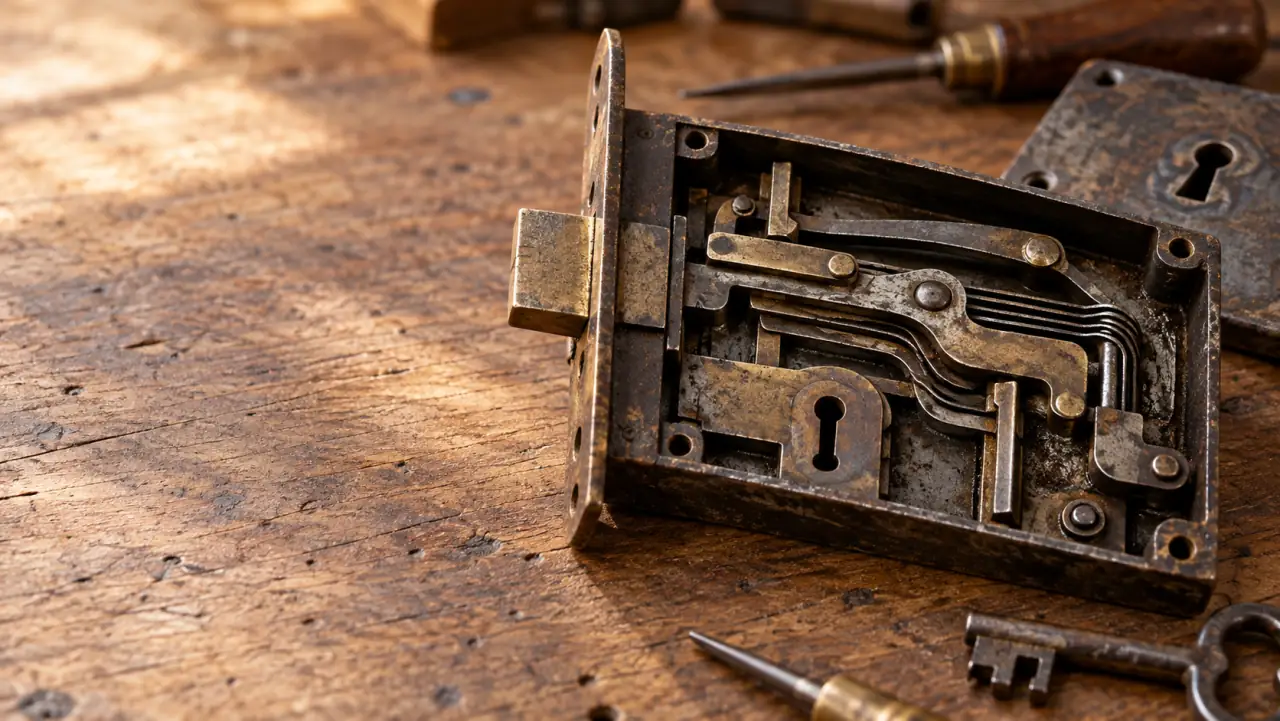
Antique lock repair restores the working parts of a historic lock.
A technician examines the springs, levers, wards, bolt, and latch, then cleans, adjusts, or replaces the worn parts. The goal is a lock that works as its maker intended.
Lock Specialists has served Simi Valley since 1973. Each job starts with a check of how much original material the lock still holds.
WHEN IT APPLIES
When is antique lock repair needed?
You need it when an antique lock binds, sticks, or fails to secure the door.
Signs you need antique lock repair
- The key turns with resistance or grinding.
- The bolt or latch sticks partway.
- A lever or ward feels loose or shifts out of place.
- A spring is visibly broken or weak.
Common problems antique lock repair addresses
- Dried oil, grime, and old lubricant trapped in the works.
- Corrosion on levers, wards, and springs.
- Worn bolts, levers, and bearing surfaces.
- Bent parts from past forced entry or heavy use.
SCOPE
What does antique lock repair include?
The service covers assessment, cleaning, repair, and a working-order test.
Inspection and assessment
The technician disassembles the lock as far as its condition allows and records wear and missing parts.
Preparation and protection
The technician protects the case, plate, and finish, and sets aside original parts for reference.
Service work and procedures
The technician cleans the mechanism, replaces broken springs, and adjusts levers and the bolt to their original travel.
Testing and verification
The technician tests the lock with its key through the full range of the bolt or latch.
PROCESS
How does antique lock repair work?
The repair follows a review, a plan, and a test.
Initial evaluation
You describe the lock, its age and maker if known, and its symptoms. You receive an upfront quote.
Recommended scope of work
On site, the technician explains which repairs keep original parts and which need replacement.
Service execution
The technician carries out the agreed repairs one step at a time and keeps replaced parts for reference.
Final inspection and completion
The technician tests the lock and confirms the bolt, latch, and mechanism move freely.
TYPES
Types of antique lock repair
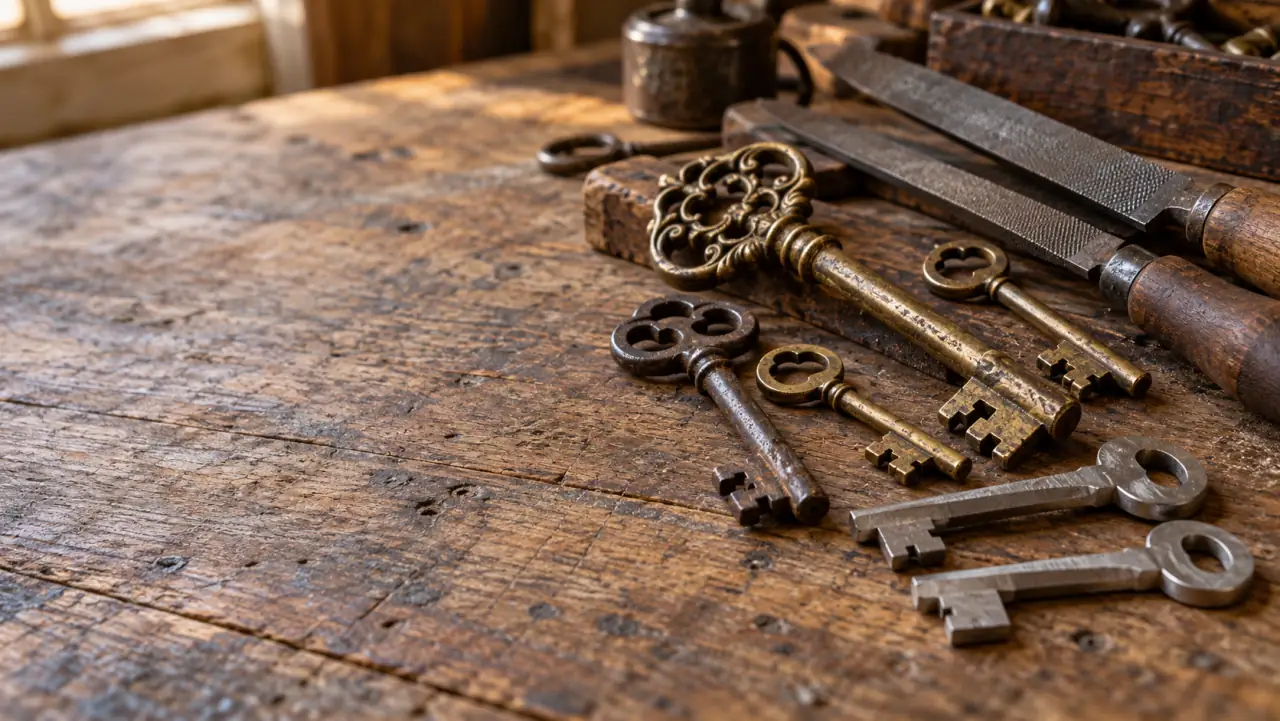
The repair depends on the lock's design and condition.
Warded lock restoration
Warded locks have fixed obstructions and a simple bolt. Restoration cleans the case, checks the bolt spring, and replaces worn parts without changing the wards.
Lever tumbler repair
Lever mechanisms need each lever to lift to a precise gap. Repair cleans the levers, straightens or adjusts them, and restores their springs.
Flat spring replacement
Flat springs push levers, latches, and bolts into place. Replacement uses stock that matches the original thickness and temper as closely as practical, and the old spring is kept for reference.
Historic mortise lock repair
A mortise lock sits inside the door edge and combines a latch, bolt, and cylinder or levers. Repair addresses the case and internal mechanism together, which can mean longer work than a surface lock.
COVERAGE
What systems and components does antique lock repair cover?
The service covers the historic lock types found in older homes.
Warded locks: chest, cabinet, and interior door locks.
Lever locks: lever tumbler locks for doors and drawers.
Mortise locks: latch, bolt, and cylinder assemblies set into the door.
Springs and levers: flat springs, coil springs, levers, and bolts.
Some locks are missing too many parts to restore. The technician tells you so before work starts.
BENEFITS
What are the benefits of antique lock repair?
Repair keeps the original hardware in service.
Original parts kept
The technician repairs the lock instead of replacing it.
Reversible steps
Many repairs can be undone without harming the lock.
Working security
The bolt and latch engage fully after repair.
Known condition
You learn exactly what the lock needed and what was done.
REPAIR OR REPLACE
Repair vs. replacement: which is appropriate?
Repair is the first choice for antique locks when the mechanism allows it.
Repair makes sense when
- The case and main parts are original and intact.
- Worn or broken parts can be replaced with period-compatible pieces.
- The lock still represents its original design.
Replacement makes sense when
- Core parts are cracked, missing, or too corroded to function.
- The lock has been altered so much that repair cannot restore it.
- Security needs call for a modern lock, and you accept the loss of original hardware.
COST
What affects the cost of antique lock repair?
Cost depends on how many parts need work and how rare they are.
Cleaning and adjusting one lever costs less than fabricating several springs and levers. Lock Specialists gives an upfront quote before beginning any work.
TIMING
How long does antique lock repair take?
Simple cleaning finishes in one visit, while full restorations take longer.
Most adjustments and cleaning finish on site in a single visit. Parts made to match an original may need extra time, and the technician confirms the timeline after the review.
WHAT TO EXPECT
What should you expect during antique lock repair?
Expect a careful process that puts original material first.
A review of the lock’s condition before any disassembly.
Notes on each part before removal.
Replaced parts kept for reference, when practical.
A final test with the key and bolt or latch.
Do not oil an antique lock heavily before the review. Heavy oil traps grit and can hide the wear the technician needs to see.
WHY US
Why choose Lock Specialists for antique lock repair?
Lock Specialists is a family-owned Simi Valley company serving the area since 1973.
Licensed: California locksmith license LCO6643, regulated by the Bureau of Security and Investigative Services (BSIS).
Background-checked: technicians complete Live Scan background checks.
On-site repair: the mobile van carries tools for cleaning, adjusting, and fitting parts.
Original-first approach: the technician explains which parts can be kept.
Service areas: Simi Valley, Moorpark, Thousand Oaks, Chatsworth, and Porter Ranch.

Dennis Murphy, owner of Lock Specialists, with the company service van.
FAQs
Frequently asked questions about antique lock repair
Can antique lock repair fix a lock with a broken spring?
Often, yes. Technicians can replace a broken flat or coil spring with a part made to match the original. Some springs are too corroded to save, so the technician explains the options first.
How often is antique lock repair needed?
Only when a lock sticks, binds, or stops working. Regular cleaning and light lubrication reduce how often a lock needs repair.
What happens if a worn lever is left unaddressed?
Wear spreads to nearby parts, and the lock can jam or stop securing the door. Forcing a worn mechanism can snap levers or bend the bolt.
Can antique lock repair be completed without removing original parts?
Sometimes. Many repairs clean, adjust, or reset original parts in place. Parts that are broken beyond repair may need replacement, and the technician identifies which ones.
What maintenance is needed after antique lock repair?
Operate the lock gently and keep it clear of dust and grit. Apply a light, period-appropriate lubricant once a year, and avoid heavy oils that collect dirt.
CUSTOMER REVIEWS




Schedule antique lock repair
