
Antique hardware restoration
Historic locks and hardware need careful stabilization and upkeep, so Lock Specialists cleans, lubricates, and matches parts on site.
ON THIS PAGE
What is antique hardware restoration?When is antique hardware restoration needed?What does antique hardware restoration include?How does antique hardware restoration work?Types of antique hardware restorationWhat systems and components does antique hardware restoration cover?What are the benefits of antique hardware restoration?Repair vs. replacement: which is appropriate?What affects the cost of antique hardware restoration?How long does antique hardware restoration take?What should you expect during antique hardware restoration?Why choose Lock Specialists for antique hardware restoration?Frequently asked questions about antique hardware restorationSchedule antique hardware restorationOVERVIEW
What is antique hardware restoration?
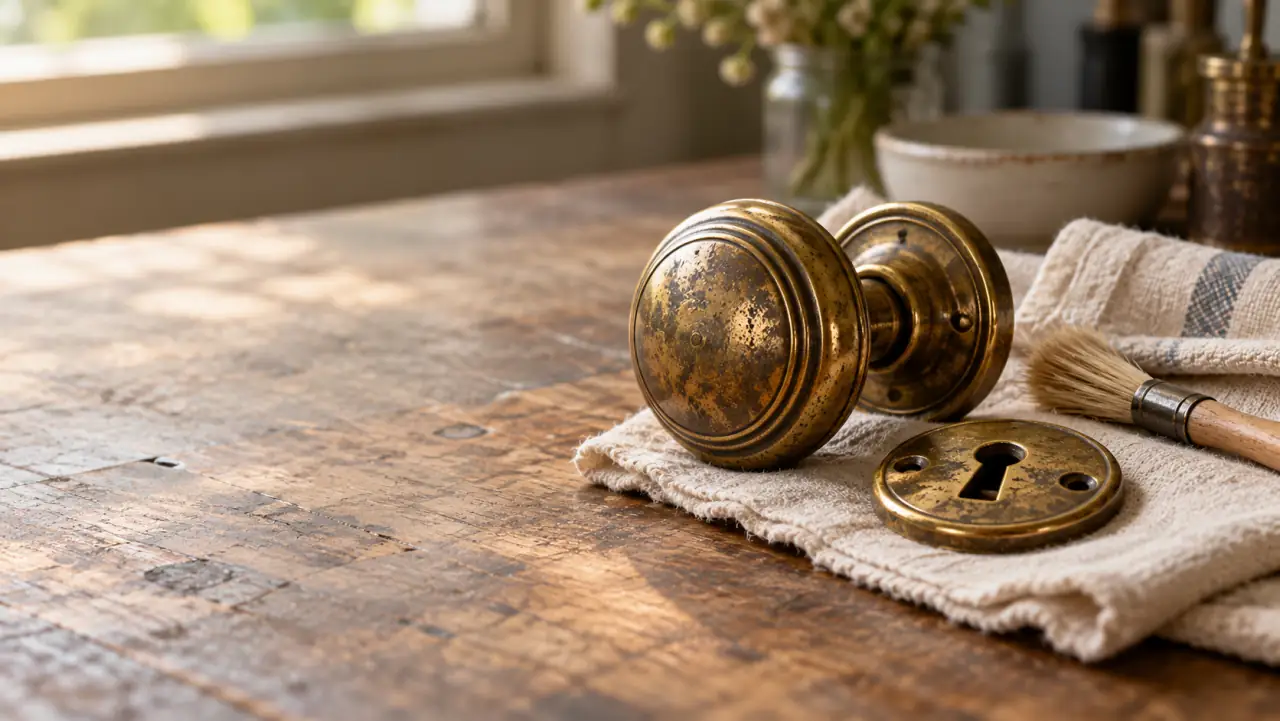
Antique hardware restoration protects historic locks, latches, and fittings by slowing their decline.
The work follows one principle: keep original material whenever possible, and make each repair reversible where practical. Technicians stabilize corrosion, clean mechanisms, and fabricate matching parts only when the original cannot be kept.
Lock Specialists has served Simi Valley since 1973. The company works with homeowners, antique collectors, and restoration contractors.
WHEN IT APPLIES
When is antique hardware restoration needed?
You need it when historic hardware shows rust, stiffness, or missing parts.
Signs you need antique hardware restoration
- Rust or pitting on bolts, plates, and knobs.
- Stiff or gritty movement in the mechanism.
- Bright or flaking plating that lifts from the base metal.
- Missing or cracked small parts, such as screws and pins.
Common problems antique hardware restoration addresses
- Moisture from humid rooms and exterior exposure.
- Old lubricant that has turned to gum or grit.
- Galvanic corrosion where dissimilar metals touch.
- Previous repairs made with mismatched parts.
SCOPE
What does antique hardware restoration include?
The service covers assessment, stabilization, cleaning, and a function check.
Inspection and assessment
The technician identifies the metal, the type of corrosion, and whether the finish is original.
Preparation and protection
The technician protects surrounding finishes and wood, and removes loose debris before treating any surface.
Service work and procedures
The technician stabilizes active corrosion, cleans the mechanism, and fabricates matching parts where the original is lost.
Testing and verification
The technician checks that each moving part operates smoothly and that the bolt or latch engages fully.
PROCESS
How does antique hardware restoration work?
The process moves from identification to a documented result.
Initial evaluation
You describe the hardware, its location, and any visible damage. You receive an upfront quote.
Recommended scope of work
On site, the technician explains which steps keep the original and where a replacement part may be needed.
Service execution
The technician applies the agreed cleaning, stabilization, and lubrication steps, and fabricates parts if you approve them.
Final inspection and completion
The technician tests each moving part and reviews the care steps you need after the work.
TYPES
Types of antique hardware restoration
Each type addresses a different cause of decline.
Corrosion removal and stabilization
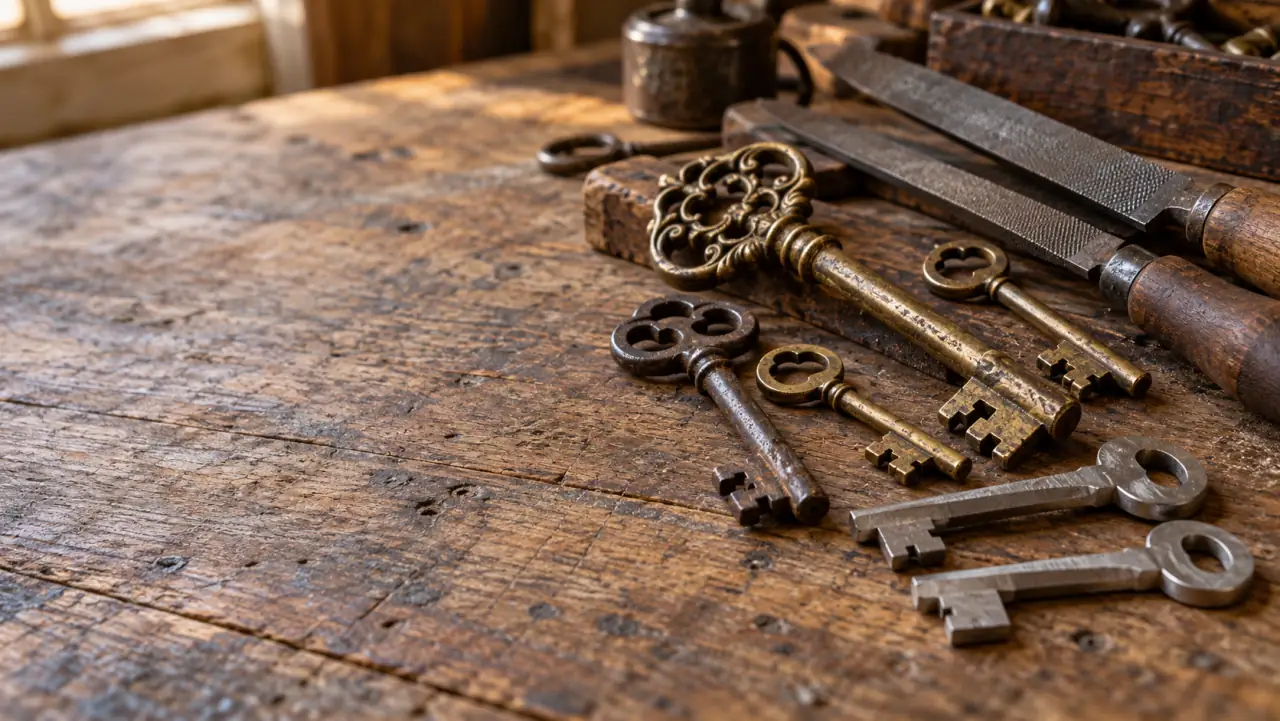
Technicians remove loose rust and debris with gentle, controlled methods. A stabilizing treatment then slows further corrosion. Aggressive removal can take away original surface and patina, so the work stays limited to what the piece needs.
Period-compatible component fabrication
When a part is lost or too damaged to keep, the technician makes a close-matching replacement. The new part fits and works, and it is recorded so it is not confused with the original.
Mechanical cleaning and lubrication
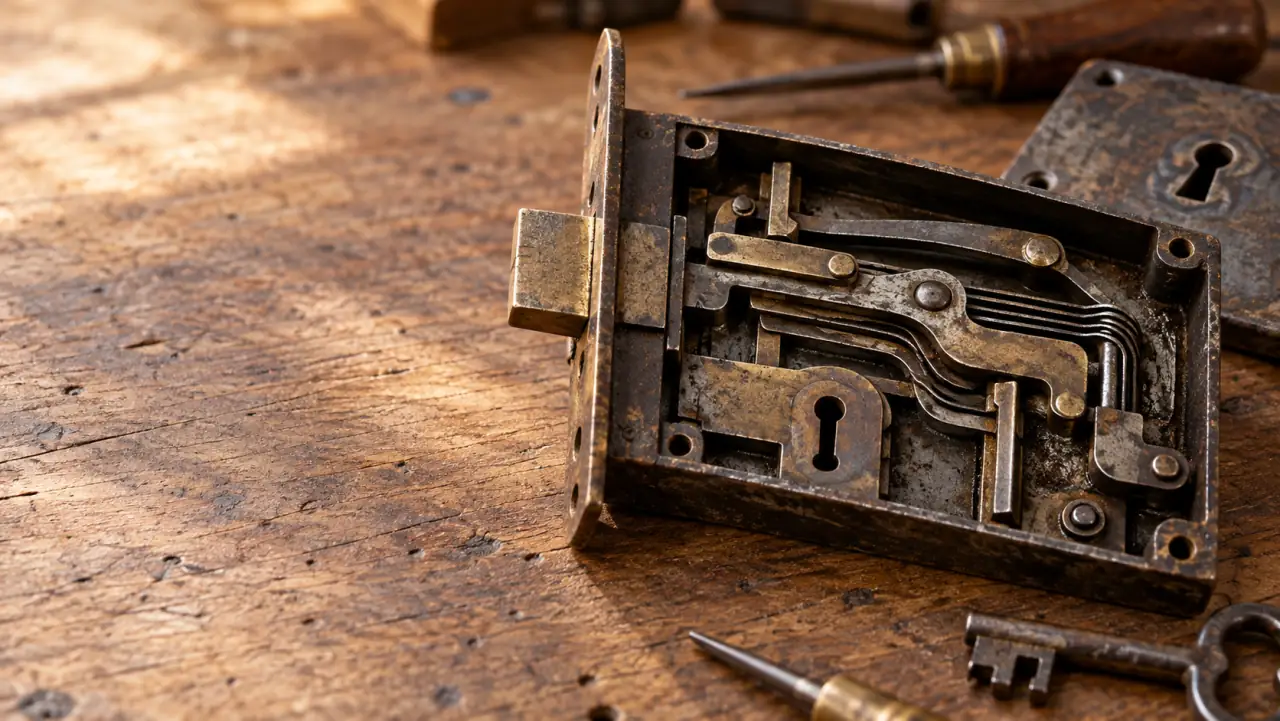
Technicians remove old oil and grit from the mechanism, then apply a light lubricant suited to the metal. Heavy oils collect dust, so the technician uses only what the mechanism needs.
COVERAGE
What systems and components does antique hardware restoration cover?
The service covers the historic hardware that holds a lock and door together.
Locks and latches: cylinders, bolts, and latch assemblies.
Knobs and handles: plated and cast metal pieces.
Plates and escutcheons: decorative and functional door plates.
Small parts: screws, pins, springs, and fasteners.
Work on plated finishes has limits. Stabilization can halt corrosion, but it cannot restore plating that has already flaked away.
BENEFITS
What are the benefits of antique hardware restoration?
Conservation extends the life of hardware and keeps its original character.
Original material kept
The technician stabilizes parts before replacing them.
Smoother operation
Cleaned and lubricated mechanisms move with less force.
Slower decline
Stabilization slows corrosion that would otherwise spread.
Reversible care
Most cleaning and lubrication steps leave the original metal intact.
REPAIR OR REPLACE
Repair vs. replacement: which is appropriate?
Conservation comes first, and replacement follows only when the original cannot function.
Conservation makes sense when
- The part is original and still has enough sound metal.
- Corrosion is surface-level or limited to a small area.
- The mechanism works and needs only cleaning and lubrication.
Replacement makes sense when
- Corrosion has eaten through structural metal.
- A part is cracked or missing and cannot be stabilized.
- The lost part can be fabricated to match, and the original is beyond use.
COST
What affects the cost of antique hardware restoration?
Cost depends on the metal, the extent of corrosion, and the number of parts.
A surface cleaning on one knob costs less than stabilizing and fabricating parts for a full lock set. Lock Specialists gives an upfront quote before beginning any work.
TIMING
How long does antique hardware restoration take?
A single cleaning finishes in one visit, while full conservation takes longer.
Cleaning and lubrication of a few pieces often finish on site in one visit. Stabilization and fabrication need extra time for curing and fitting, and the technician confirms the schedule during the review.
WHAT TO EXPECT
What should you expect during antique hardware restoration?
Expect a measured process that favors original material.
A review of each piece before any treatment begins.
Protection of nearby finishes, wood, and glass.
Stabilization and cleaning in the order the technician sets.
A function check of every moving part.
Do not scrub historic plating with abrasives. Abrasives remove the finish and expose base metal that corrodes faster.
WHY US
Why choose Lock Specialists for antique hardware restoration?
Lock Specialists is a family-owned Simi Valley company serving the area since 1973.
Licensed: California locksmith license LCO6643, regulated by the Bureau of Security and Investigative Services (BSIS).
Background-checked: technicians complete Live Scan background checks.
Original-first method: the technician keeps original parts where the lock allows.
On-site work: the mobile van carries tools for cleaning, lubrication, and fitting.
Service areas: Simi Valley, Moorpark, Thousand Oaks, Chatsworth, and Porter Ranch.

Dennis Murphy, owner of Lock Specialists, with the company service van.
FAQs
Frequently asked questions about antique hardware restoration
Can antique hardware restoration remove rust without damaging the original finish?
Partly. Gentle cleaning and stabilization halt active corrosion, but some surface pitting and patina cannot be reversed. The technician explains what can be preserved before work begins.
How often is antique hardware restoration needed?
It depends on the environment. Hardware in damp rooms or on exterior doors needs attention more often than interior pieces kept dry.
What happens if active corrosion is left unaddressed?
Rust spreads into the mechanism and can seize levers, springs, and bolts. Corrosion can also weaken thin parts until they break.
Can antique hardware restoration be completed without removing the hardware from the door?
Sometimes. Many cleaning and lubrication steps happen in place. Stabilizing corroded parts or fabricating new ones often requires removal, and the technician notes which steps need it.
What maintenance is needed after antique hardware restoration?
Wipe hardware dry after humid weather and keep its moving parts lightly lubricated. Check for new rust spots each season and act on changes early.
CUSTOMER REVIEWS




Schedule antique hardware restoration
